
A desk cracking after one year is rarely a sudden accident. In many corporate offices, the first signs appear quietly: a thin line near the edge, a slightly raised corner, a tabletop that no longer feels completely flat, or a gap that becomes more obvious after the dry season. By the time the purchasing team receives complaints, the desks have already been installed, used, cleaned, moved, and exposed to months of indoor air conditioning.
For office furniture buyers, school project buyers, furniture distributors, and workspace contractors, this is a serious after-sales issue. A solid wood large desk is usually purchased in quantity, so one cracking problem can quickly become a batch problem. The cost is not only replacing several desks. It also includes customer complaints, site visits, repair work, delayed project acceptance, and damage to supplier trust.
Wood-based desks react to their environment. Even when the surface looks stable during delivery, the board can still change after months of use if moisture control is poor. Corporate offices often run air conditioning for long hours, especially in meeting rooms, shared work areas, libraries, training centers, and administrative offices. This can make the indoor air dry for long periods.
When the tabletop loses moisture unevenly, the surface may shrink, the edge may pull open, or the board may show small cracks. In humid areas, the opposite problem can happen. The board may absorb moisture, swell slightly, then shrink again when the room becomes dry. This repeated movement is one reason many desks develop visible defects after a period of use.
For B2B buyers, the key is to check how the board is prepared before it becomes a desk. Material stability matters more than a smooth sample photo. If the board moisture, pressing quality, and surface treatment are not controlled well, the desk may look good at first but fail after entering a real office environment.
A large desk has a wider surface area, so the board structure must remain stable under daily use. Employees may place computers, books, files, monitors, water cups, office equipment, and personal items on the same desk. In schools or training rooms, several users may share one table at different times. The larger the desktop, the more important the internal board structure and support system become.
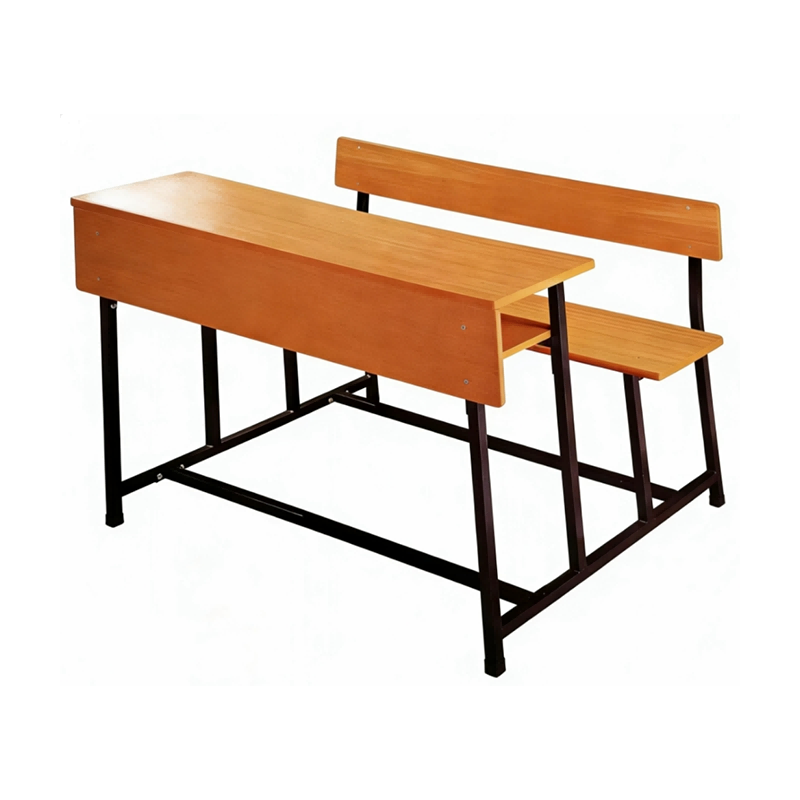
We are XIAOYING, and our Large Solid Wood Desk uses E0 grade solid wood multi-layer board with an 18mm desktop. This board structure is more practical for office and education projects where buyers need a stable tabletop for repeated use, not only a natural-looking surface.
A solid wood large desk should be reviewed as a working surface. Buyers should check whether the desktop thickness, board structure, frame support, and edge treatment are suitable for the room where it will be used. A desk for a temporary display area and a desk for daily office work should not be judged by the same standard.
Many cracking complaints start at the edge. The center of the tabletop may still look acceptable, but the side edge begins to show opening, lifting, or roughness. This happens because edges face more contact during use. They are touched, wiped, bumped, moved, and exposed to cleaning moisture more often than people realize.
Edge banding is not just a finishing detail. It protects the board from daily wear and helps reduce moisture entry from the side. If the edge sealing is weak, water from cleaning cloths or indoor humidity can affect the board faster. If the banding is thin, loose, or poorly attached, the desk may start looking old long before the surface is actually worn out.
For corporate offices and schools, this is very visible. Desks are often arranged in rows or shared spaces, so damaged edges make the whole room look poorly maintained. A buyer may think the issue is cosmetic, but in bulk projects it quickly becomes an after-sales problem.
A large tabletop needs a frame that keeps the surface supported evenly. If the frame is weak, the desktop may carry weight unevenly. Over time, this can increase stress on the board and make warping more likely. A large desk that shakes during use also creates a poor impression, even if the board itself is still intact.
Our large solid wood desk is supported by a 30×30mm steel tube frame with surface treatment for daily project use. The ≥200kg load capacity gives buyers more confidence in shared office, classroom, reading room, and training space applications.
For furniture distributors and project buyers, this point is worth explaining to customers. A strong frame is not only about carrying weight. It helps the whole desk stay stable, reduces movement during use, and supports the tabletop across a wider area.
Some desks develop problems not because of the board itself, but because of what happens after production. If desks are stored in a damp warehouse, exposed during unloading, stacked unevenly, or installed before the project site is dry, the board may absorb moisture or suffer edge stress before users even start working on it.
This is why packaging and site handling matter in bulk furniture orders. Foam protection and export carton packing can reduce transport damage, while disassembled packing can make delivery and installation easier for large orders. But once the goods arrive, the buyer also needs to manage storage properly.
Desks should be kept indoors, away from wet floors, direct rain, and unfinished construction areas. If flooring, painting, or wet work is still ongoing, furniture should not be placed too early. Good manufacturing can still be weakened by poor site storage.
Before purchasing a solid wood large desk in bulk, buyers should not only ask about price and size. They should describe the use environment clearly. Will the desks be used in air-conditioned offices? Will they be near windows? Will cleaning teams wipe the surface every day? Will the desks be moved often? Will the room be dry, humid, or seasonally changing?
These questions help the supplier recommend a safer structure and packing method. They also help buyers avoid choosing a desk only by appearance. For corporate offices, schools, libraries, and training centers, durability is often more valuable than a slightly lower purchase cost.
Many large desks crack after one year because moisture control, board structure, edge sealing, frame support, storage, and installation timing were not considered together. For B2B buyers, the real problem is not one cracked desk. It is the possibility that the same issue appears across a whole batch after the project has already been delivered.
For offices, schools, libraries, and shared workspaces, the safer approach is to review the desk as a long-term working surface before ordering. If previous purchases have shown cracking, warping, or edge-opening problems, the next order should start with the environment: room humidity, cleaning method, storage condition, desktop size, frame support, and delivery schedule.
We are XIAOYING, and our large solid wood desk can support buyers who need durable shared desks for office and educational projects. Tell us the room type, quantity, expected daily use, delivery plan, and storage condition before bulk production, and our team can help review whether the desk structure and packing arrangement are suitable for the project.
 Email:


