Office decoration should improve both appearance and daily use. A good office supports concentration, communication, storage, movement, and visitor reception without filling the room with unnecessary furniture or decorative items.
Before choosing wall colors or accessories, consider how the space will be used and how many people need to work in it.
The size and function of the room should guide every decoration decision. A private office, shared workspace, training room, and reception area require different arrangements.
Record the room dimensions, door position, windows, electrical outlets, and fixed equipment before buying furniture.
This helps prevent tables or cabinets from blocking walkways, natural light, or access to power connections.
Consider whether the room is mainly used for computer work, document handling, customer meetings, training, or teamwork.
Furniture should support the most frequent activities instead of being selected only for appearance.
Employees and visitors should be able to move through the office without walking around chairs, boxes, or open cabinet doors.
Adequate space around desks also makes cleaning and maintenance easier.
Dividing the room into simple functional areas can make even a small office feel more organized.
Each employee should have enough surface space for essential equipment and daily documents. Frequently used items should remain within reach, while less-used materials can be stored elsewhere.
A shared table can be used for short meetings, document review, training, or project discussions.
A Two Seater Office Table may be suitable for small offices where two employees need separate positions but floor space is limited. It can also be used in administrative departments, staff training rooms, or institutional work areas.
Cabinets and shelves should be positioned near the people who use them without blocking aisles.
Labeling shared storage can reduce clutter and make documents or office supplies easier to find.
Visitor seating should remain separate from the main working path. In a compact room, two simple chairs may be more practical than a large sofa.
Computer screens and confidential documents should not be directly visible from the visitor position.
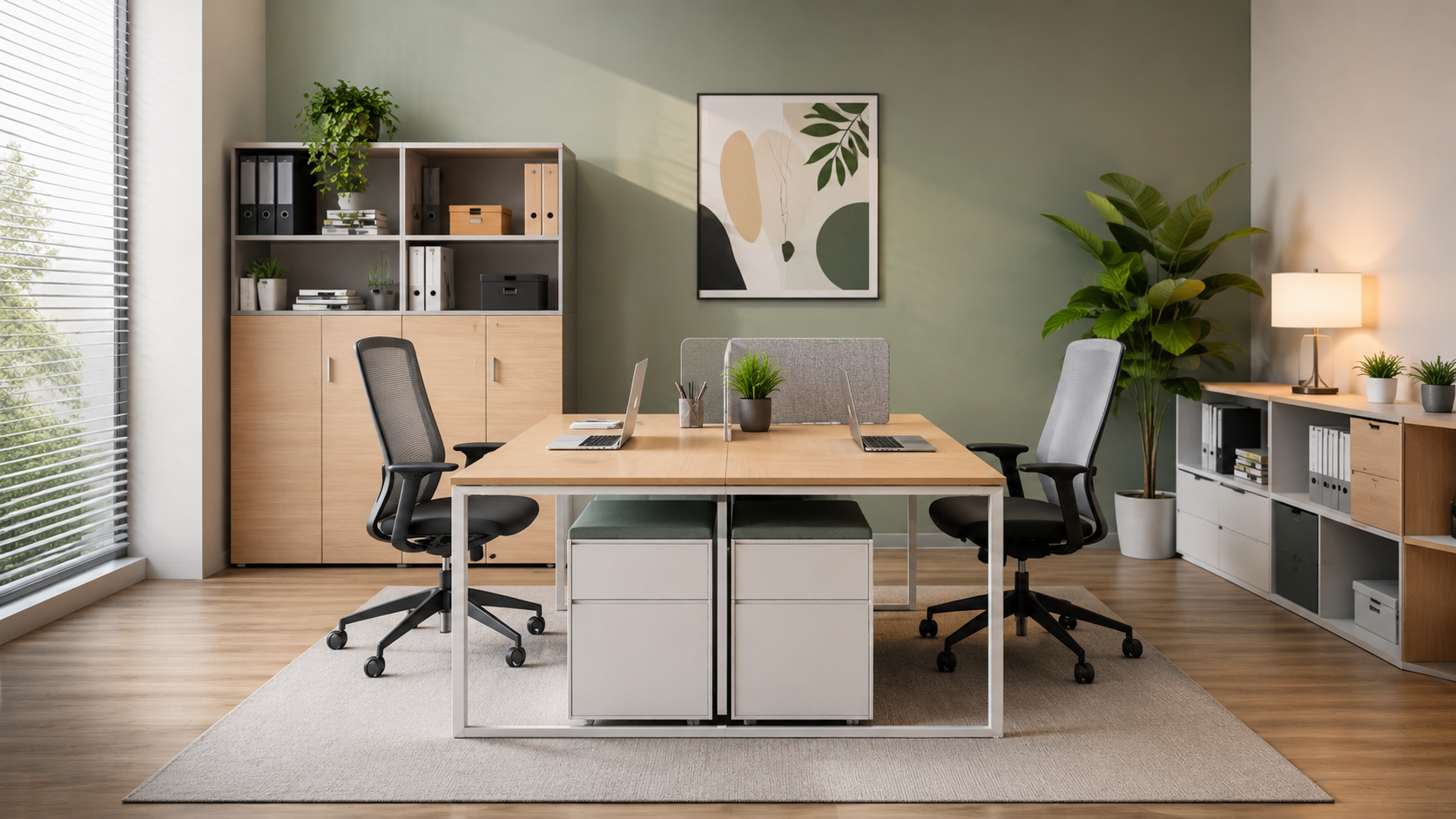
Organized office with a compact two-person work table
Color and lighting can make the office feel more comfortable, but both should support work rather than create distraction.
Neutral walls and large furniture pieces are easier to coordinate. Light gray, beige, white, and natural wood tones can create a clean professional background.
One or two accent colors can be added through chairs, storage panels, artwork, or small accessories.
Brand colors can appear in signage, selected walls, or furniture details. Using strong colors on every surface may make the room visually tiring.
Position desks to benefit from daylight without creating strong screen glare.
General ceiling lights can be combined with task lighting for reading, drawing, or detailed work. Tall cabinets should not block windows or reduce natural light.
Office decoration should add identity while keeping work surfaces clear.
Company milestones, project photographs, maps, certificates, or product images may be more meaningful than unrelated decorative artwork.
Use a limited number of larger items instead of covering every wall with small objects.
Plants can soften the office environment and add natural color. Select varieties that match the available light and maintenance conditions.
Plants should not block walkways, windows, or shared work surfaces.
A few personal items can make a desk feel comfortable, but shared offices should keep enough space for equipment, documents, and daily tasks.
Furniture should fit the room, user requirements, and expected daily workload.
When selecting a two seater office table, buyers should check the tabletop dimensions, working height, frame structure, seat position, storage options, edge treatment, and movement space.
Our factory produces double-seat tables, school desks and chairs, reading furniture, nap furniture, and other products for education and institutional projects.
We support customization of size, height, color, logo, material, storage structure, and packaging. Buyers can confirm drawings or samples before bulk production to reduce specification differences.
After arranging the furniture, walk through the office from both an employee and visitor perspective.
Check whether the room feels open, storage is accessible, screens remain private, lighting is comfortable, and chairs can move without blocking walkways.
A well-decorated office does not need many objects. It should feel organized, practical, and suitable for the work performed there.
Preparing an office, staff room, training center, or institutional workspace? Send us your preferred two seater office table size, color, height, quantity, application, and packaging requirements. We will review the details and prepare a product proposal and quotation.
 Email:


