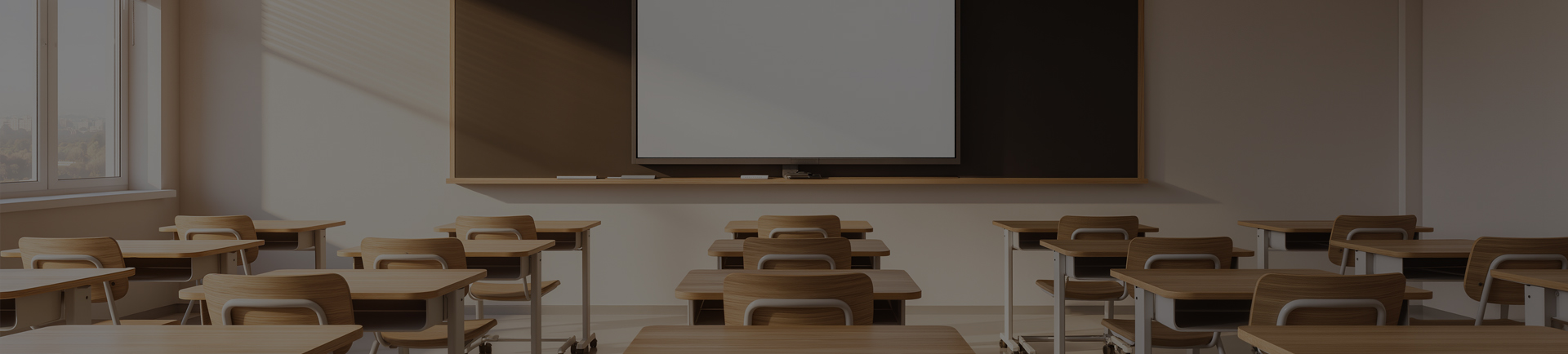
Classroom desks should match the age of the students, teaching method, available floor space, and expected daily workload. The right school desk provides enough writing space, supports a comfortable sitting position, remains stable during use, and can be maintained efficiently over many school years.
For education furniture importers and school project contractors, desk selection also involves quantity planning, packaging, classroom layout, and supply consistency. A visually attractive desk may still be unsuitable if its dimensions or structure do not match the actual learning environment.
Age and body size are the first factors to review. Young children need furniture with accessible dimensions, rounded edges, and a stable structure. Older students may require a larger desktop for textbooks, notebooks, computers, and technical learning materials.
The buyer should identify:
Student age range
Average body height
Expected number of students
Classroom teaching format
Required desk and chair combination
Whether different sizes are needed
One desk size may not be suitable for an entire school. Some projects require several size options for primary classrooms, secondary classrooms, laboratories, and adult training rooms.
The classroom layout determines whether individual desks, two-person desks, or collaborative tables are most suitable.
Individual student desks provide personal working space and make it easy to create row-based seating. They are useful for examinations, standard lessons, and classrooms where students need separate work areas.
Two-person desks make better use of classroom space and can encourage cooperation. They may suit schools that use paired learning or need to accommodate more students within a defined room size.
Collaborative tables support group discussion, project work, and flexible teaching. They are often used in modern learning spaces, libraries, reading rooms, and activity classrooms.
XIAOYING supplies single desks, double desks, Reading Tables, and Collaborative Desks. Its educational furniture categories help buyers compare products for different areas of a school.
The desktop should provide enough room for the student’s normal learning materials without making the classroom difficult to arrange.
Consider whether students need space for:
Textbooks
Exercise books
Writing tools
Drawing materials
Tablets or laptops
Measuring tools
Group project materials
A larger desktop provides greater comfort, but it also occupies more floor space. Schools should measure the room, aisle width, teacher movement area, and emergency routes before confirming dimensions.
A desk should not be selected separately from the chair. The seat height, desk height, legroom, and desktop angle should work together.
A suitable combination allows students to:
Sit with their feet supported
Keep their elbows near the desktop
Read without leaning excessively
Move their legs comfortably
Enter and leave the seat safely
If desks and chairs are purchased from different suppliers, dimension compatibility should be checked carefully. A mismatch can reduce comfort even when both products appear well made.
The frame supports the desktop and determines how the desk responds to daily use. Important construction details include the leg arrangement, welding points, cross supports, fasteners, and contact with the floor.
A dependable classroom desk should:
Remain stable during writing
Resist normal movement
Support books and equipment
Avoid sharp exposed edges
Be easy to clean beneath
Maintain alignment after repeated use
For a Commercial Grade school desk supply project, buyers should request product samples and inspect the frame, desktop connection, surface finish, and overall balance before approving mass production.
Classroom furniture is cleaned frequently. Desks with complicated structures or difficult-to-reach gaps may require more maintenance time.
Choose surfaces that are:
Smooth
Easy to wipe
Resistant to common marks
Less likely to retain dust
Suitable for regular school cleaning
Color also affects maintenance. Very light surfaces may show marks more easily, while darker surfaces may show dust or scratches. The right choice depends on the school’s cleaning routine and visual preferences.
Some school desks include book compartments, under-desk storage, or other space-saving features. Storage can help students keep learning materials organized and reduce clutter around the classroom.
However, storage should not reduce legroom or create sharp corners. Schools should evaluate whether the storage area is easy for students to reach and whether it can be cleaned efficiently.
| Requirement | Suitable Desk Direction |
|---|---|
| Individual examinations | Single student desk |
| Paired learning | Double student desk |
| Group projects | Collaborative table |
| Limited classroom space | Compact desk |
| Primary students | Smaller ergonomic desk |
| Reading areas | Reading table |
| Flexible classroom | Movable or modular design |
| Large campus project | Standardized desk series |
A Reliable Export Supplier of school desks should be able to discuss technical specifications, order quantities, packaging, quality control, and delivery requirements.
Procurement teams should ask about:
Product dimensions
Materials and finishes
Student age suitability
Desk and chair matching
Color customization
Logo and packaging options
Sample production
Quality inspection
Loading quantity
Production lead time
XIAOYING was founded in 2003 and specializes in the research, development, production, and sales of educational equipment. The company has obtained ISO9001 quality management system certification and supports OEM and ODM projects for schools, distributors, and educational furniture brands.
A Bulk Supply of school desks and chairs requires more detailed planning than a small purchase. Buyers should prepare a quantity list by classroom, model, size, color, and destination.
It is also useful to confirm:
Carton dimensions
Container loading plan
Installation instructions
Replacement parts
Spare components
Delivery batches
Inspection requirements
For international projects, export packaging should protect the desktop corners, frame surfaces, and chair components during transportation.
An OEM ODM Manufacturer of educational furniture can adjust desk dimensions, colors, materials, storage functions, and packaging according to the buyer’s market.
XIAOYING supports customized school desks and chairs for different education projects. Its production range also covers reading tables, Folding Beds, Dormitory Beds, canteen tables, and chairs, allowing buyers to develop a broader school furniture procurement program.
The right classroom desk should match the student group, room layout, teaching method, desktop needs, chair dimensions, frame structure, storage requirements, and maintenance routine. A successful purchase depends on how well the desk functions in the real classroom.
XIAOYING provides school desks, chairs, reading tables, collaborative tables, and campus furniture for wholesalers, education contractors, project buyers, and school furniture brands. Its OEM/ODM and export supply capabilities support both standard orders and customized classroom solutions.
 Email:


