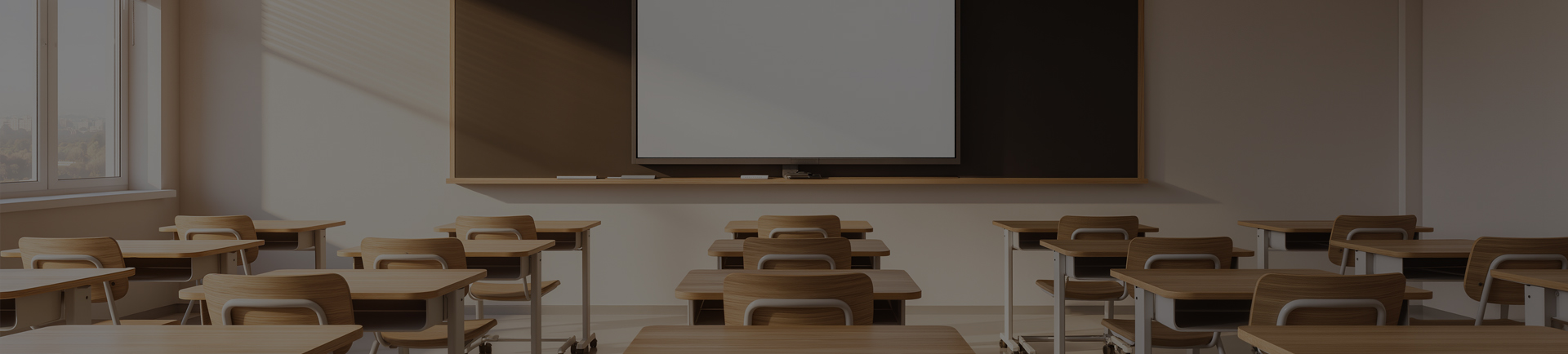
The right student desk depends on teaching methods, classroom activities, student age, and learning requirements. Flexible classrooms may require adjustable or Collaborative Desks, while traditional classrooms may benefit from stable individual desk designs.
A classroom is no longer designed only for students sitting in rows and listening to lectures.
Modern education environments increasingly include different teaching methods, such as:
Teacher-led instruction
Group discussions
Project-based learning
Independent study
Collaborative activities
Because classroom activities have changed, school furniture selection has also become more complex.
For school administrators, education project developers, and furniture distributors, choosing desks is not only about size and appearance. The desk structure can influence:
Classroom flexibility
Student interaction
Space utilization
Teaching efficiency
Long-term furniture value
A desk that works well in a traditional classroom may not be suitable for a modern learning environment.
Different learning environments create different furniture requirements.
In traditional classrooms, students mainly face the teacher and focus on individual learning.
Important desk requirements include:
Stable structure
Comfortable writing surface
Easy classroom arrangement
Efficient space usage
Individual student desks or paired desks are commonly used because they support organized seating arrangements.
Collaborative classrooms require students to communicate and work together.
Furniture needs to support:
Group discussion
Team activities
Flexible classroom layouts
Desks that can be moved or rearranged easily are often preferred.
Project-based learning requires students to complete tasks, create presentations, and interact with classmates.
The ideal desk should support:
Multiple working positions
Group cooperation
Different classroom layouts
This type of classroom often benefits from flexible furniture systems.
Student desks are not passive classroom equipment.
Their design affects how students interact with the learning environment.
A suitable desk can improve:
Sitting comfort
Organization
Classroom movement
Teacher management
For example, desks with appropriate dimensions allow students to maintain better posture during long study periods.
A poorly designed desk may create problems such as:
Limited leg space
Incorrect writing height
Reduced comfort during extended classes
For schools purchasing hundreds or thousands of desks, these small differences become important because students use the furniture every day.
The choice between fixed and adjustable desks depends on the target students and classroom requirements.
Fixed desks are commonly selected for:
Standard classrooms
Large-scale school projects
Budget-controlled education facilities
Advantages include:
Simple structure
Lower maintenance requirements
Efficient production
For schools with students in similar age groups, fixed desks can provide practical value.
Adjustable desks provide flexibility because students grow at different rates.
They are often considered for:
International schools
Multi-age classrooms
Premium education facilities
Advantages include:
Longer usable life
Better adaptation to student growth
Improved ergonomic support
However, adjustable systems require higher manufacturing precision because moving parts must maintain stability over repeated use.
Professional buyers should evaluate more than the desk appearance.
Important factors include:
Different age groups require different desk dimensions.
Primary school students, middle school students, and university students have different ergonomic needs.
The same desk may perform differently depending on classroom size.
Schools should consider:
Desk arrangement
Walking space
Storage requirements
Teaching activities
School furniture experiences intensive daily use.
Important quality factors include:
Frame strength
Surface resistance
Edge safety
Connection stability
For school furniture manufacturers, production quality determines long-term performance.
A professional production process includes:
Common materials include:
Steel frames
MDF panels
Particle boards
Plastic components
The material combination affects:
Strength
Weight
Durability
Cost
The steel structure needs accurate processing to ensure:
Stability
Load-bearing performance
Long service life
Welding quality and coating treatment are especially important because classroom furniture is exposed to repeated movement.
Desktop surfaces need to withstand:
Writing
Cleaning
Daily impact
Professional manufacturers control edge finishing and surface treatment to improve safety and durability.
Large education projects often have different requirements.
Schools and distributors may need:
Specific colors
Customized sizes
Logo printing
Special storage solutions
Different classroom configurations
A manufacturer with OEM capability can adjust products according to project requirements.
This is especially important for:
Government education projects
International schools
Furniture distributors
The right student desk depends on the learning style, classroom design, student age, and teaching activities. Traditional classrooms may need stable desks, while flexible learning environments benefit from movable or adjustable solutions.
For schools, education suppliers, and furniture distributors, selecting desks based on learning requirements helps create more effective learning spaces.
 Email:


