
Business trips often include meetings, transportation, customer visits, messages, and preparation within a limited schedule. Without clear boundaries, work may continue from early morning until late at night.
Work-life balance during business travel does not mean spending equal time on work and leisure. It means completing important tasks while still protecting sleep, meals, short breaks, and personal routines.
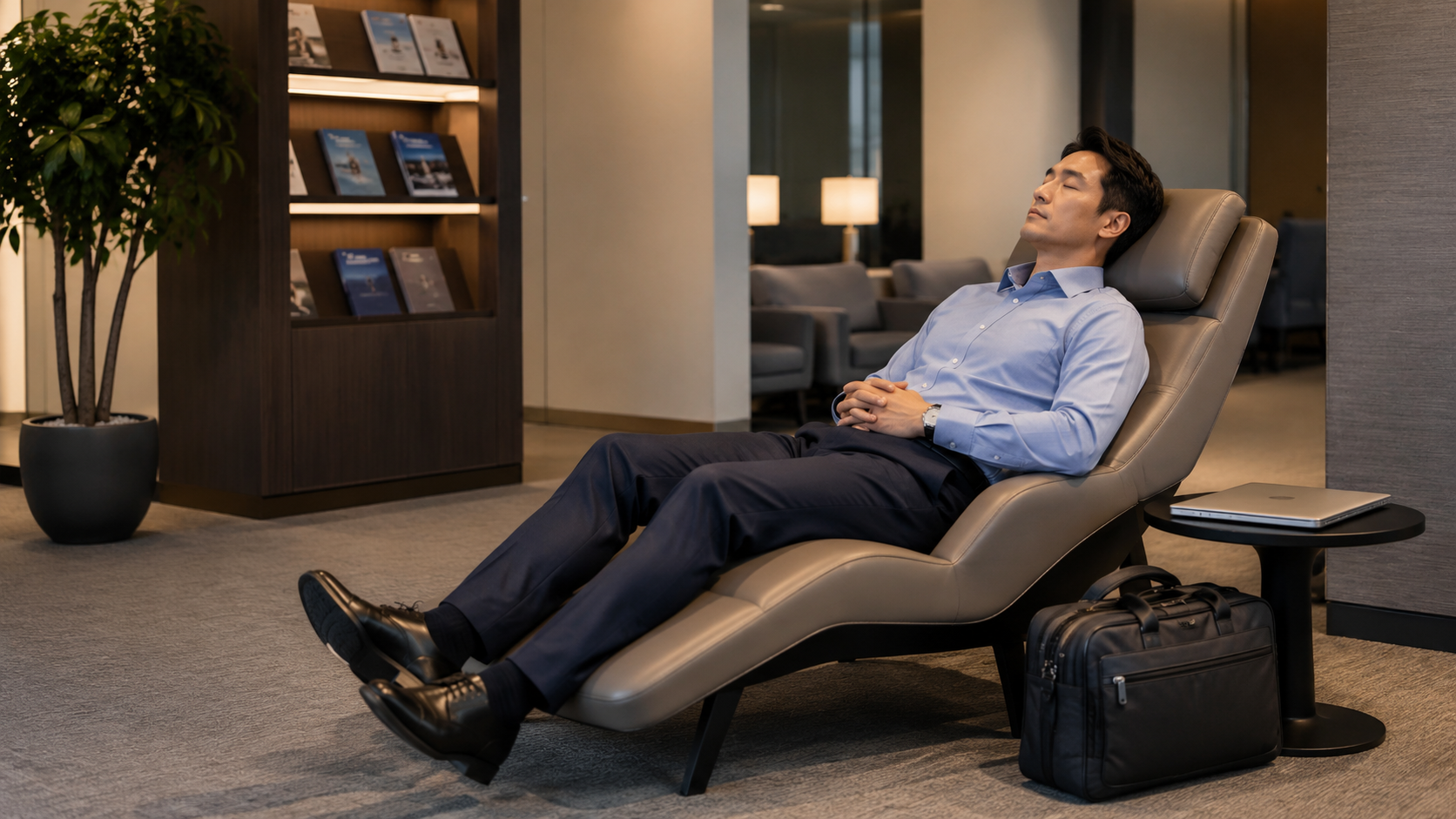
Business traveler resting in a quiet office area
A manageable trip begins with a realistic schedule. Too many meetings in one day can reduce concentration and leave no time for delays or preparation.
List the meetings, inspections, exhibitions, or customer visits that must be completed. Separate essential work from activities that can be postponed or handled online.
This helps prevent every free hour from becoming another appointment.
Short gaps allow time for transportation, note-taking, meals, and unexpected changes.
Scheduling meetings too closely may cause one delay to affect the rest of the day.
Inform colleagues when you will be in meetings or traveling. Establish suitable periods for replying to emails and messages.
This reduces the pressure to remain available every minute of the trip.
Business travel can be tiring even when the actual meeting time is limited. Airports, traffic, unfamiliar locations, and constant decision-making can also consume energy.
A free thirty minutes does not always need to become another work session. It can be used for walking, drinking water, reviewing the next meeting, or simply sitting quietly.
Short breaks may improve concentration during later discussions.
Irregular meals can affect energy and focus. Identify suitable restaurants or simple meal options near the hotel and meeting locations before the trip.
Carry water and avoid relying entirely on last-minute food choices.
Some evening tasks may be necessary, but they should have a clear finishing time.
Choose the most urgent items and leave less important emails, formatting, or internal discussions for the next working period.
Rest does not always mean taking a long nap. A controlled short break can help after an early flight, exhibition day, or extended customer visit.
A suitable rest area is especially useful in offices, training centers, staff rooms, and shared workplaces.
Set an alarm and avoid resting too late in the day. The purpose of a short nap is to reduce immediate fatigue without affecting normal nighttime sleep.
After resting, allow a few minutes for water and light movement before returning to work.
A quiet area with suitable lighting and seating can provide a more comfortable break than resting at a desk.
A Nap Chair for Work can function as normal seating while also offering a reclining position for short rest periods. Models with adjustable backrests and foot supports can help save space compared with placing a bed in the office.
Business travel changes the environment, but maintaining a few familiar routines can make the schedule easier to manage.
| Routine | Practical Approach |
|---|---|
| Morning preparation | Keep ten minutes for planning or stretching |
| Exercise | Choose a short walk rather than a demanding workout |
| Family contact | Schedule a suitable call time |
| Evening rest | Stop non-urgent work before bedtime |
| Personal time | Add it to the schedule instead of leaving it unplanned |
Keeping one or two realistic habits is often more effective than trying to follow a complicated routine.
Companies that regularly receive traveling staff, trainers, sales teams, or visiting partners may benefit from a small rest area.
Buyers selecting a nap chair for work should consider the backrest adjustment, foot support, frame stability, seat comfort, cleaning requirements, and available floor space.
Our factory supplies nap chairs, school furniture, Reading Tables, and other furniture for education and institutional environments. We support size, color, structure, logo, and packaging customization according to project requirements.
For bulk purchasing, buyers can review drawings or samples before production to confirm product dimensions and functions.
After the trip, record which parts of the schedule caused unnecessary pressure. Consider whether meetings were too close together, evening work was excessive, or rest periods were missing.
Small adjustments can make the next trip more productive without extending working hours.
Planning a rest area for an office, staff room, training center, or shared workspace? Tell us your preferred nap chair for work design, quantity, color, functional requirements, and destination market. We will provide product details and a purchasing quotation.
Previous: How To Decorate Your Office at Work?
 Email:


